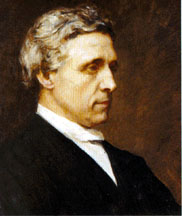
Showing posts with label Lewis Carroll. Show all posts

Friday, February 26, 2010

Lewis Carroll's Career

Charles Dodgson’s (or Lewis Carroll’s) professional literary career spans from 1865- till his death in 1898. When he was young, he wrote poems and small literary works, that he contributed to the family magazine Mishmasch. He also sent these small works to various magazines, achieving moderate success. Between 1854 and 1856, his work appeared in the national publications, The Comic Times and The Train, as well as smaller magazines such as the Whitby Gazette and the Oxford Critic. Dodgson’s career as a professional writer started with the publishing of a romantic poem called “solitude” that was published in The Trains under his pen name Lewis Carroll. Throughout his career he would go on to use this name under all his literary works. His next work was Alice’s Adventures in Wonder land. This was to be title that would make him famous. The book was published in 1865. The unanticipated commercial success of
the first Alice book changed Dodgson’s life in several ways. He became wealthy rather quickly and the name “Lewis Carroll” became renowned around the world. Though he achieved great commercial success, he continued with his post at Christ Church. Some years later in 1871, he published a sequel to the first Alice book titled Through the Looking-Glass And What Alice Found There. The sequel portrayed a darker tone than the first Alice book, and it is suggested that it was because of the troubles that Dodgson was going through during that time, dealing with his father’s death that put him into a deep depression for some years (Cohen, Morton N). Like its predecessor, Through the looking glass achieved great commercial success. In 1876, Dodgson published his last great literary work, The Hunting of the Snark. Unlike the Alice books, this work is a poem with a fantastical flare, but like the Alice books, it too achieved great success. His last novel, the two-volume Sylvie and Bruno, was published in 1889 and 1893 respectively. Due to its confusion baffling most readers, it achieved little success.


Before becoming a professional writer, Dodgson was a gentleman photographer. A recent study exhaustively lists every surviving print, and Taylor calculates that just over fifty percent of his surviving work depicts young girls,though this may be a highly distorted figure as approximately 60% of his original photographic portfolio is now missing (Taylor, Roger; Wakeling, Edward). Dodgson also made many studies of men, women, male children and landscapes; his subjects also include skeletons, dolls, dogs, statues and paintings, and trees.


Apart from writing poems and novels, Dodgson also excelled at writing arithmetic text books. He primarily worked in subjects of geometry, matrix algebra, and mathematical logic. He produced nearly a dozen of significant books which advanced the knowledge of the subjects for their time. The his mathematical work was so well received that it firmly placed him within the middle ranks of professional mathematicians during the period in which he worked, and he was one of the leading British mathematicians of the era.

Works Cited


Taylor, Roger; Wakeling, Edward. Lewis Carrol: Photographer. 25 February 2002.

Cohen, Morton N. Lewis Carroll: A Biography. Vintage Books. 26 November 1996.

Friday, February 19, 2010

Carroll's Biography


Lewis Carroll (1832-1898) was an English writer, mathematician, and Anglican clergyman ,who is remembered most for writing Alice’s Adventures in Wonderland (1865). Charles Lutwidge Dodgson, or “Lewis Carroll”, as he would later be known, was born January 27 1832. Charles was born to a mostly conservative, High Church Anglican, northern English family with some Irish background. Many of Dodgson’s past relatives served as army officers or were clergyman of the Church of England. His mother’s name was Frances Jane Lutwidge and his father was Charles Dodgson. Both his parents were married cousins. His father was gifted in the science of mathematics which won him a double first degree. His father was much involved in the Anglican Church, and would raise his family with highly conservative standards which young Charles would later develop distaste for (Karoline Leach, Victoria Web).


Young Charles was born in the village of Daresbury, Cheshire England. Young Charles was the oldest boy of the family of eleven children. Charles was eleven when his family moved to Rectory, which would be his home for the next twenty five years. Being taught at home as a child, he displayed an impressive intellect and was reading the Pilgrims Progress when he was only seven years of age. Like his siblings, Charles suffered from a stammer that would affect him socially throughout his life (Karoline Reach, Victoria Web). He would later be sent to a small private school in Richmond when he turned twelve. He immensely enjoyed his stay at Richmond, but to his disappointment, was sent to Rugby School. Like his father, Charles was especially gifted in mathematics and was well liked by his professors at Rugby. After leaving Rugby in 1849, he went to Oxford, but after only being there two days, had to go back home after hearing that his mother had died of a stroke.


Charles had other interests other than just mathematics. He was deeply interested in the art of photography, which he became quite successful at. His primary subjects were small children, mainly focusing on little girls. He was also interested in theater.


Charles excelled at literature. His early work was mostly small satirical works, like short stories and poems, which he sent to magazines. In 1856 he published his first piece of work under the name that would make him famous. A romantic poem called "Solitude" appeared in the Train magazine under his pen name 'Lewis Carroll'. Charles had a drive to succeed academically, and succeed he did. He earned his B.A. in 1854 with First Class Honors in mathematics, Second in Classics, and in 1857 graduated with an M.A. Also in 1856, Charles was appointed Mathematical Lecturer at Oxford. He would hold this position for twenty-five years (C. D. Merriman, Online Literature). Around the time of his appointment at Oxford, he met a new Dean at Christ’s Church. This man was named Harry Liddell. Charles became very good friends with the Liddell family, especially Harry’s three daughters, Lorina, Edith and Alice. He entertained the children by drawing pictures for them and telling them stories. These stories marked the beginning of Alice’s adventure in Wonderland, which he would later publish, achieving great success.


Being from a religious family, Charles took deacons orders at the Christ Church Cathedral in1861 but was never made a priest. He believed becoming a priest would take time away from his cultural endeavors and hobbies. As stated previously, he had been writing small works for magazines, but until now, his friends urged him to put his Alice stories to paper. They were published in 1865 with great success. From 1865 till his death, he would write a number of works, including Through the Looking-Glass and Jabberwocky as well as books on mathematics and politics. Charles decided to focus his attentions solely on writing, and in 1881, he resigned from this lecturer position at Oxford. His next years would be spent writing and touring Europe and Russia with his friends. On 14 January 1898, Charles Lutwidge Dodgson died in Guildford England by pneumonia, in his sister’s home. He is buried along side his siblings in The Mount cemetery in Guildford, Surrey, England.


Works Cited


C.D Merriman. 2007. Web.
19 February 2010 <http://www.online-literature.com/carroll/>.


Karoline Leach. " Charles Lutwidge Dodgson (Lewis Carroll): A brief Biography." 25 November 2004. Web. February 19 2010 <http://www.victorianweb.org/authors/carroll/bio1.html>.